

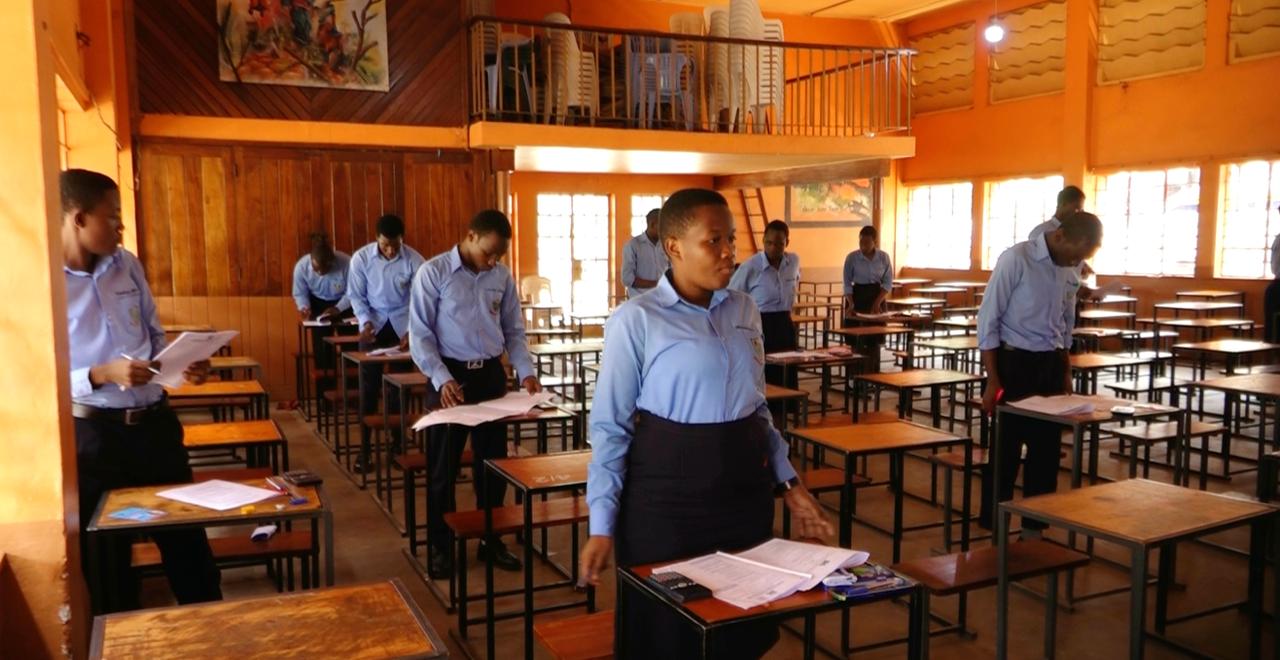
The release of the 2025 Uganda Advanced Certificate of Education (UACE) results has highlighted a striking trend: female students across the country outperformed male candidates in most subjects, despite being fewer in number.
Of the 165,172 candidates who sat the examinations, 72,374 were female and 92,798 male, yet the proportion of female candidates achieving higher pass levels was consistently better in Humanities, Mathematics, General Paper, and Information and Communication Technology (ICT).
Uneb’s analysis shows that 44.6 percent of female candidates achieved three Principal passes (3P) compared to 39.5 percent of male candidates.
In the two Principal pass (2P) category, females achieved 28.2 percent against 25.8 percent of males, while failure rates were lower among female candidates at 0.8 percent compared to 1.4 percent for males.
This pattern demonstrates not only strong performance by girls but also their growing competitiveness in Uganda’s education system.
Subject-specific performance further illustrates the trend. In Literature in English, 10.8 percent of females attained top grades compared to 8.7 percent of males.
In Mathematics, female students secured 10.7 percent A-level passes, only slightly below the 14.1 percent of males at the very top, while outperforming males in overall pass rates.
In General Paper, History, and Subsidiary ICT, female candidates consistently scored higher, reflecting solid analytical, comprehension, and technical skills.
Experts point out that while female performance has improved, overall participation in Science and Mathematics subjects remains lower than that of males.
Uneb data shows that only 25,001 females sat Mathematics compared to 45,130 males, and female entries in Physics fluctuated at around 4,688 candidates.
This indicates that gender parity in enrolment, particularly in STEM fields, is still a work in progress.
Education specialists note that the trend of higher performance by females could influence future policies and interventions.
“These results underscore the need to encourage more girls to take up Science, Technology, Engineering, and Mathematics (STEM) subjects from an early stage, while maintaining strong academic support in Humanities where they already excel,” said a senior education officer familiar with Uneb’s analysis.
The implications of these results are significant for higher education and workforce development. With a higher proportion of females qualifying for degree programmes, universities may see more balanced gender representation in classrooms.
The data also suggests that targeted mentorship, scholarship programmes, and STEM initiatives for girls could further bridge the participation gap.
